
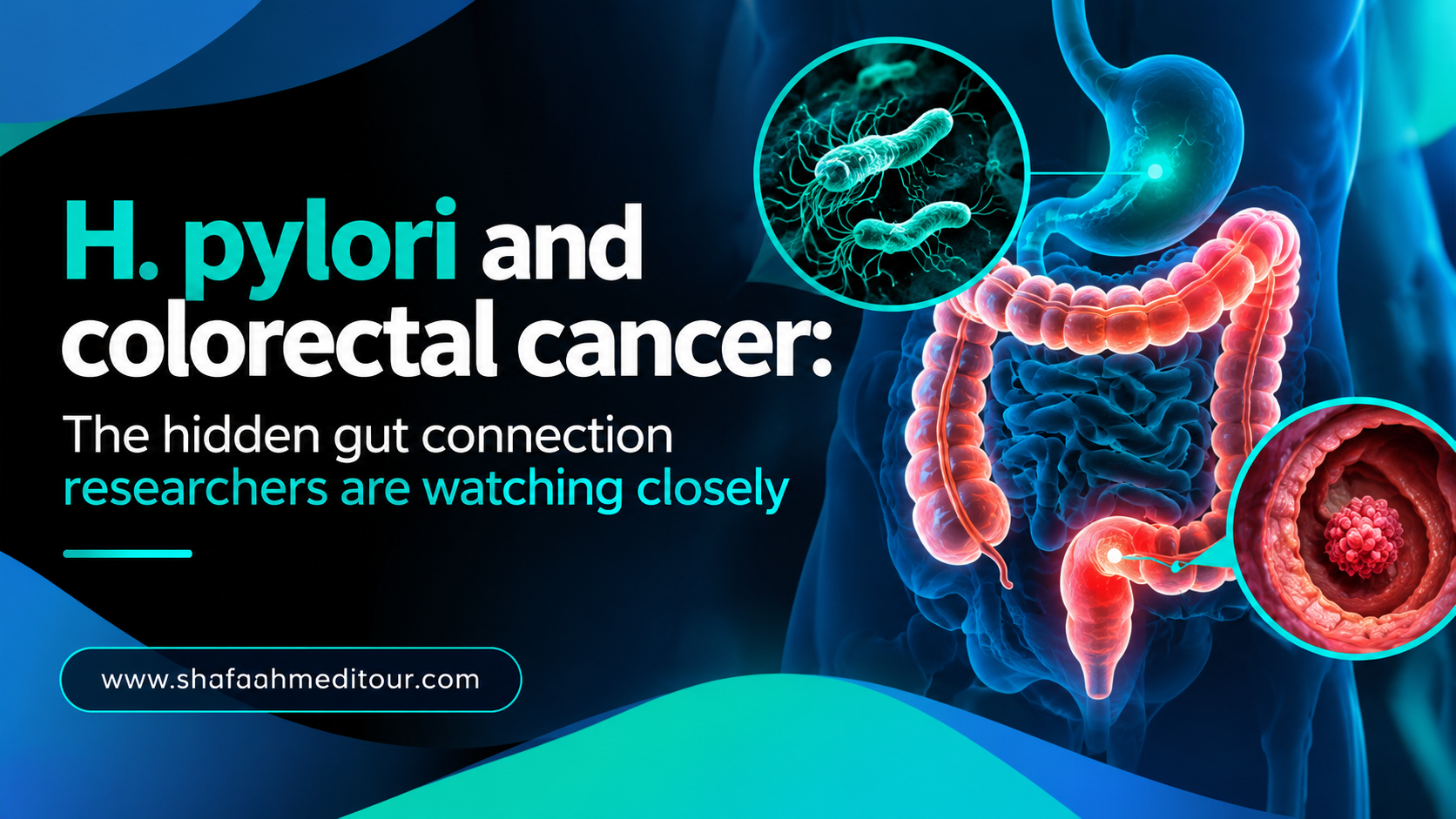
1. For years, Helicobacter pylori, better known as H. pylori, has been discussed mainly as a stomach problem. It is strongly linked with gastritis, peptic ulcers and gastric cancer, so most people naturally think of it as an infection that begins and ends in the upper digestive tract. But research has increasingly pushed the conversation further down the digestive system. Several observational studies and meta-analyses have reported an association between H. pylori infection and colorectal adenomas, advanced adenomas and colorectal cancer. A 2025 systematic review and meta-analysis involving more than 503,000 participants across 40 studies found that H. pylori-positive individuals had higher odds of colorectal adenoma and advanced colorectal adenoma. That does not mean an H. pylori infection automatically leads to colorectal cancer. It means the relationship deserves attention, particularly when other colorectal cancer risk factors are present.
2. The most important point is the difference between association and causation. Researchers can observe that H. pylori infection and colorectal abnormalities occur together more often in certain populations, but that alone cannot prove the bacterium is directly responsible for cancer development. Earlier meta-analyses reported elevated odds of colorectal cancer among people with H. pylori, while other analyses have produced more mixed findings depending on geography, study design and the type of colorectal lesion examined. A large umbrella review published in 2025 found a positive association between H. pylori and colorectal cancer across the meta-analyses it evaluated, estimating an odds ratio of 1.40. At the same time, the authors were assessing observational evidence, which means important questions about mechanisms, confounding factors and causality remain.
3. So why would an infection that primarily colonizes the stomach be connected with changes in the colon? One possible explanation involves the broader gut environment rather than a simple one-organ effect. H. pylori can influence inflammation, immune responses, gastric acidity and the microbial ecosystem of the digestive tract. Researchers have proposed that these changes could potentially affect intestinal microbial balance and inflammatory pathways farther along the gastrointestinal tract. Other explanations include shared lifestyle, metabolic or environmental factors that increase the likelihood of both H. pylori infection and colorectal disease. These are biological hypotheses, not established explanations for colorectal cancer, and researchers are still working to determine which mechanisms matter most.
4. The strongest recent signal may actually be found before cancer develops. Colorectal adenomas are growths in the colon that can sometimes become cancerous over time, particularly when they are advanced or have certain pathological features. The 2025 meta-analysis found that H. pylori infection was associated with benign colorectal polyps as well as colorectal adenomas and advanced adenomas, with an estimated odds ratio of 1.71 for colorectal adenoma and advanced adenoma combined. This matters because colorectal cancer prevention is not simply about finding cancer early. Colonoscopy can identify and remove certain precancerous lesions, interrupting the progression toward cancer. The finding therefore gives researchers another reason to investigate whether controlling H. pylori could have implications beyond stomach disease.
5. There is another reason this subject deserves a careful discussion in Asia, including Malaysia and other parts of Southeast Asia. The relationship between H. pylori and colorectal abnormalities has not appeared identical across every population. In the 2025 meta-analysis, the association with colorectal adenoma was stronger in the Asian subgroup than in the Western subgroup, although differences between populations can reflect many factors and should not be interpreted as proof that ethnicity itself causes the increased risk. Earlier research in East Asian populations has also reported an association between H. pylori infection and colorectal cancer, although substantial differences between individual countries and studies were observed. This is precisely why population-specific research matters.
6. If you have H. pylori, the practical message is not to panic about colorectal cancer. It is to take the infection seriously and manage it properly. The American College of Gastroenterology’s 2024 H. pylori guideline recommends treatment for people found to be infected and emphasizes confirming eradication after treatment using an appropriate test such as a urea breath test, stool antigen test or biopsy-based testing. Eradication matters because untreated H. pylori is already an established concern for stomach-related disease. The possible colorectal connection adds another reason to discuss persistent infection with a qualified healthcare professional rather than ignoring it or repeatedly treating symptoms without confirming whether the bacterium has actually been eliminated.
7. At the same time, treating H. pylori should not be presented as a proven colorectal cancer prevention strategy. Current evidence does not justify telling people that eliminating H. pylori will prevent colorectal cancer. There are simply too many unanswered questions. The studies showing the association are largely observational, and people with H. pylori may differ from uninfected people in diet, socioeconomic conditions, medication use, smoking, healthcare access, age and other factors that can influence colorectal disease. Even when researchers adjust for some of these variables, residual confounding can remain. That distinction is essential for responsible health communication: H. pylori is a potential piece of the colorectal cancer risk puzzle, not a proven single cause.
8. People should also avoid another common mistake: assuming that the absence of stomach symptoms means there is nothing to investigate. H. pylori infection can exist without dramatic symptoms, while colorectal cancer can also develop with few or no early warning signs. When symptoms do occur, they can include persistent changes in bowel habits, blood in the stool, abdominal pain or cramping, unexplained weight loss, fatigue and iron-deficiency anaemia. The World Health Organization emphasizes that colorectal cancer may have no symptoms in its early stages and that early detection can substantially improve outcomes. New or persistent symptoms deserve medical assessment rather than being automatically blamed on gastritis, “sensitive stomach,” haemorrhoids or dietary changes.
9. Screening remains important even if you have never had H. pylori. Your colorectal cancer risk is influenced by multiple factors, including age, family history, previous colorectal polyps, inherited conditions, inflammatory bowel disease, body weight, physical activity, smoking, alcohol and dietary patterns. Screening recommendations differ by country and individual risk. For example, the U.S. Preventive Services Task Force recommends colorectal cancer screening for average-risk adults beginning at age 45, continuing through age 75, with individualized decisions for some adults aged 76 to 85. Your local healthcare system may use different recommendations, so the right starting age and screening method should be discussed with a healthcare professional.
10. Prevention also goes beyond one bacterium. Evidence-based colorectal cancer prevention focuses on the overall pattern of how a person eats and lives. A diet rich in whole grains, vegetables, fruits, beans and other fibre-containing foods, regular physical activity, maintaining a healthy weight, avoiding tobacco and limiting alcohol are all relevant pieces of the broader prevention picture. The World Cancer Research Fund reports strong evidence linking physical activity with lower colon cancer risk and recommends an overall dietary and lifestyle pattern that supports colorectal cancer prevention. This is not about finding one “superfood” or one supplement that supposedly cleans the colon. Long-term risk is shaped by multiple exposures over time.
11. The H. pylori–colorectal cancer connection is therefore a developing area of medical research, not a reason for fear or sensational headlines. What we know today is that H. pylori is an important gastrointestinal infection with established health consequences, and a growing body of research has identified an association between H. pylori and colorectal neoplasia. What remains uncertain is exactly how much of that relationship is causal, which patients may be most affected, and whether successful H. pylori eradication changes future colorectal cancer risk. If you have confirmed H. pylori, discuss appropriate testing and eradication with your healthcare professional, complete the recommended follow-up testing, and do not postpone colorectal cancer screening because you feel well. The most useful response to emerging medical evidence is not fear. It is informed action, appropriate screening and timely professional care.