When the Immune System Becomes Part of the Cancer Puzzle
Cancer in children is one of medicine’s most challenging problems. A diagnosis can transform a family’s life within days, bringing difficult decisions, demanding treatments, and uncertainty about the future. Unlike many adult cancers, childhood cancers are rarely explained by years of smoking, occupational exposure, or other familiar lifestyle-related risk factors. In many cases, the underlying causes remain unclear.
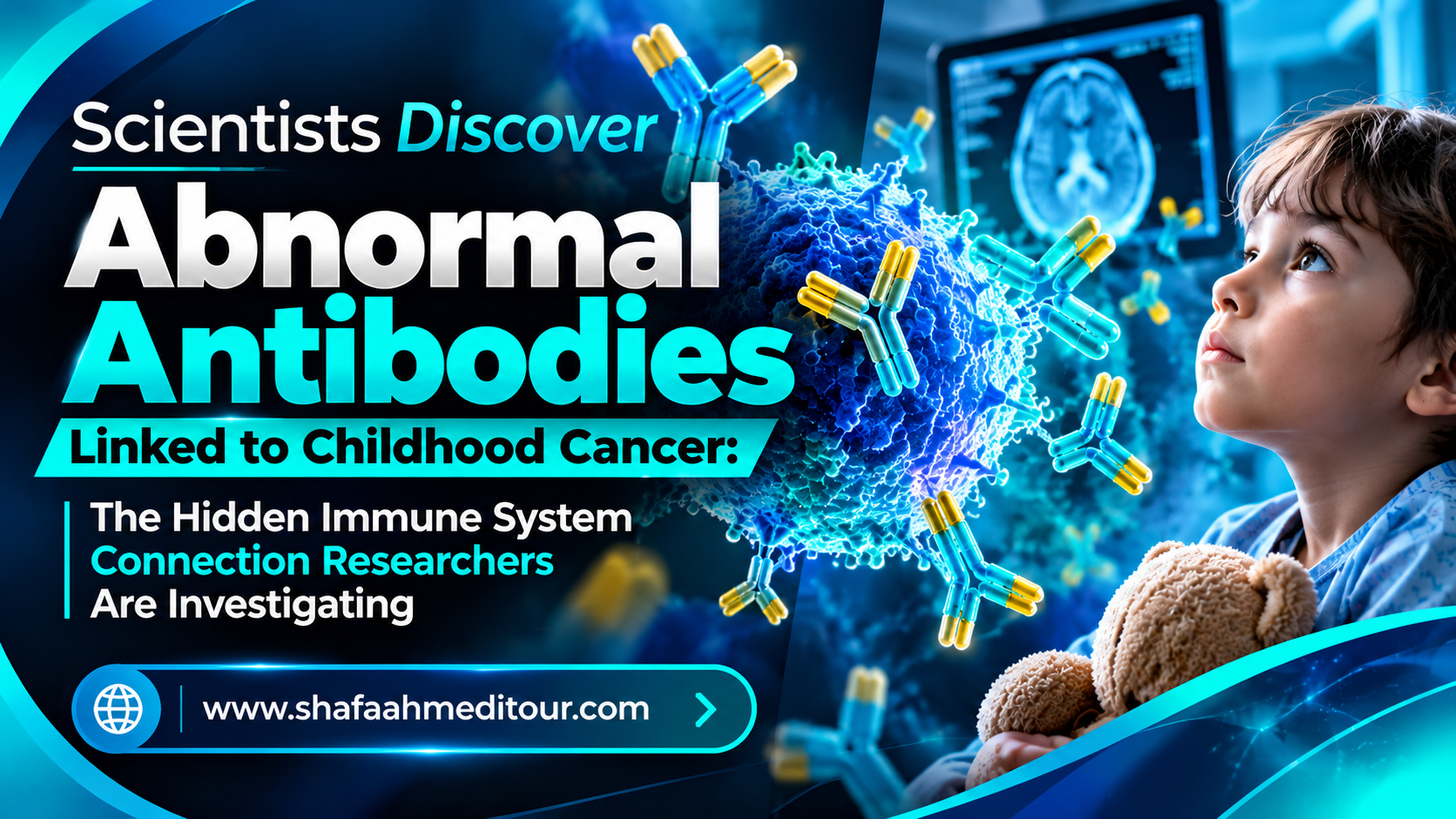
Scientists are therefore investigating the biological processes that may influence cancer development during childhood. One area receiving scientific attention is the immune system, particularly the role of antibodies and abnormal immune responses. Antibodies are proteins produced by specialized immune cells to recognize and help neutralize potentially harmful substances. They are essential to the body’s defence against infections, but immune activity is complex, and not every antibody behaves as expected.
Reports describing abnormal antibodies associated with childhood cancer raise important questions about the relationship between immune dysfunction and cancer development. However, the precise findings depend on the particular study, antibody type, and cancer being investigated. It is important not to interpret every abnormal antibody finding as evidence that antibodies directly cause cancer. Researchers must establish whether an immune abnormality contributes to disease, develops in response to it, or simply occurs alongside it.
The distinction matters. Understanding the difference between a biological association and a proven cause is essential for interpreting scientific discoveries accurately and identifying opportunities that could eventually benefit children and their families.
What Are Abnormal Antibodies, and Why Do They Matter?
Antibodies, also known as immunoglobulins, are part of the adaptive immune system. They recognize specific molecular structures called antigens and help the body respond to infections and other threats. Their activity is central to immune protection, and their production is carefully regulated.
Sometimes, however, the immune system produces antibodies that react against the body’s own tissues. These are known as autoantibodies. In other circumstances, antibodies may show unusual concentrations, characteristics, or patterns of activity. Such findings can occur in autoimmune disorders, infections, immune deficiencies, and other medical conditions.
The term abnormal antibodies does not describe one single disease or biological mechanism. It can refer to several different findings, and each has to be interpreted in its clinical context.
Scientists studying childhood cancer may investigate whether particular antibodies recognize proteins associated with cancer cells, influence immune signalling, or reflect changes in the body’s normal immune regulation. These possibilities are biologically different and should not be treated as interchangeable.
For example, some antibodies can recognize proteins produced by tumour cells. These are often described as tumour-associated antibodies. Their presence may indicate that the immune system has detected unusual cellular activity. In some circumstances, such antibodies could help researchers identify biological signals associated with a particular cancer.
Yet detecting an antibody associated with a tumour does not automatically mean that the antibody caused the tumour to develop. It may instead be a response to changes that have already occurred.
This distinction is central to understanding the science behind antibody research and its potential medical applications.
How Could Immune System Abnormalities Be Connected to Childhood Cancer?
The immune system does more than fight infections. It also participates in regulating inflammation, monitoring abnormal cells, and maintaining the body’s internal balance. Scientists have long investigated how disruptions in these processes may influence cancer development.
Several biological mechanisms could help explain a relationship between immune abnormalities and certain childhood cancers.
One possibility involves immune surveillance. Under normal circumstances, immune cells can recognize and eliminate some abnormal cells before they develop into clinically detectable disease. If this protective process is impaired, certain abnormal cells may have a greater opportunity to survive and multiply. However, the extent to which this mechanism contributes to an individual childhood cancer varies.
Another possibility involves persistent inflammation. In some diseases, prolonged inflammatory activity can alter the cellular environment and affect signals involved in cell growth and survival. Chronic inflammation is an established contributor to certain cancers, particularly in adults, but this does not mean that inflammation or abnormal antibodies generally cause childhood cancer.
A third area of investigation concerns immune regulation. The immune system must distinguish between harmful threats and healthy tissues. When this regulation breaks down, immune responses can become misdirected. Researchers are studying how particular immune disturbances may intersect with genetic changes, cellular signalling, and the development of specific cancers.
These mechanisms provide scientific reasons to investigate antibodies and childhood cancer. They do not establish that one universal antibody abnormality explains childhood cancer as a whole.
Why Childhood Cancer Requires a Different Scientific Approach
Childhood cancer is not a single disease. It includes many distinct conditions, such as leukaemia, lymphoma, brain tumours, neuroblastoma, and other solid tumours. Each has its own biological characteristics, patterns of development, and treatment requirements.
Some childhood cancers are associated with identifiable genetic changes that occur in developing cells. Others may involve inherited predispositions, environmental influences, immune-related factors, or combinations of biological processes that scientists do not yet fully understand.
For this reason, a discovery involving antibodies in one childhood cancer cannot automatically be applied to every other cancer affecting children.
Researchers must examine the specific disease, the antibody involved, and the circumstances in which it appears. They also need to determine whether the finding is consistent across different groups of children and whether it provides information beyond existing diagnostic methods.
A result observed in a small research group may be valuable because it identifies a new direction for investigation. However, it generally requires confirmation in larger and more diverse populations before it can influence routine medical practice.
This careful approach protects scientific accuracy and helps ensure that promising discoveries are developed into reliable clinical tools.
Could Abnormal Antibodies Help Detect Childhood Cancer Earlier?
One of the most important questions raised by antibody research is whether these biological signals could eventually support earlier cancer detection.
Many cancers produce changes that can be measured in blood or other biological samples. Researchers are investigating biomarkers that might help identify disease, assess its characteristics, monitor treatment response, or detect recurrence.
Antibodies are one possible component of this research. If a particular antibody pattern consistently appears in children with a specific cancer, scientists may investigate whether it could help distinguish affected children from those without the disease.
Such a test would need to meet demanding standards before it could be used in clinical settings. It would have to demonstrate adequate sensitivity, meaning it can identify a high proportion of children who have the disease. It would also need adequate specificity, meaning that it does not incorrectly classify large numbers of children without the disease as having cancer.
These requirements are especially important because childhood cancer is uncommon compared with many everyday childhood illnesses. Even a test that performs reasonably well under certain research conditions could generate substantial numbers of false-positive results if used to screen a population in which the disease is rare.
Researchers must also establish whether the antibody appears early enough to provide meaningful clinical benefits. A marker that becomes detectable only after a tumour has developed may still help with diagnosis or monitoring, but it may not enable early detection.
At present, abnormal antibody findings should not be treated as a general screening method for childhood cancer. Families should not assume that routine antibody testing can predict whether a child will develop cancer.
The potential value lies in rigorous research to determine whether specific antibody markers can improve diagnosis for particular diseases.
Could This Research Lead to More Personalised Cancer Treatment?
The study of antibodies could also contribute to the development of more personalised approaches to cancer care.
Modern oncology increasingly examines the biological characteristics of an individual patient’s disease. Depending on the cancer, clinicians may use genetic testing, molecular profiling, immune markers, and other diagnostic information to guide treatment decisions.
Antibodies already have important applications in cancer medicine. Certain therapeutic antibodies are designed to recognize specific targets on cancer cells or interfere with signals that help tumours grow. Other antibody-based treatments can help the immune system identify and attack malignant cells.
These established approaches provide a foundation for continued research into the relationship between antibodies and cancer.
If scientists identify a particular immune abnormality that contributes to a specific childhood cancer, further investigation could determine whether that mechanism offers a useful treatment target. Researchers would need to establish whether modifying the immune response is effective and safe, especially because children’s immune systems and developing organs require particular consideration.
The possibility of antibody-guided treatment is promising, but it should not be confused with a confirmed treatment breakthrough arising from every new antibody discovery.
Any proposed therapy must undergo appropriate laboratory studies, clinical trials, and safety evaluations. For childhood cancers, the goal is not simply to attack the disease. It is also to improve long-term survival, reduce treatment-related complications, and protect children’s quality of life as they grow.
What Parents Should Know About the Research
Scientific reports about childhood cancer can understandably cause concern, especially when they suggest that an unexpected biological process may be involved in the disease.
Parents should keep several important points in mind.
First, abnormal antibody levels do not automatically indicate cancer. Antibody tests are used to investigate many different conditions, and results must be interpreted alongside symptoms, medical history, examination findings, and other investigations.
Second, childhood cancer generally cannot be predicted through a single routine blood test. A clinician may recommend specific investigations when a child’s symptoms or medical history warrant further assessment, but no general antibody test can reliably rule out all childhood cancers.
Third, research findings do not necessarily translate into immediate changes in medical practice. A discovery may take years of additional investigation before scientists can determine whether it has diagnostic or therapeutic value.
Finally, parents should not blame themselves if a child develops cancer. Many childhood cancers arise through biological processes that families cannot control or reasonably predict. An abnormal immune finding, where present, does not establish that a parent did something wrong or that a child’s illness could have been prevented.
If a child has persistent, unexplained, or worsening symptoms, parents should seek medical advice. Depending on the circumstances, symptoms that warrant assessment may include unexplained bruising or bleeding, persistent fever, unusual paleness, unexplained weight loss, persistent bone pain, or an unusual lump or swelling. These symptoms can have many causes, and their presence does not necessarily mean that a child has cancer.
The appropriate response is a professional medical assessment rather than attempting to diagnose a serious illness through isolated laboratory results or online information.
What Scientists Must Establish Before the Discovery Changes Medicine
For antibody research to become clinically useful, scientists need to answer several difficult questions.
They must identify the exact antibody or antibody pattern involved and establish whether the finding can be reproduced independently. They must determine whether it appears before cancer develops, emerges as a consequence of the disease, or reflects another condition that occurs alongside it.
Researchers also need to investigate the biological mechanism. If an antibody appears to contribute to cancer development, scientists must establish how it acts, which cells or pathways it affects, and whether the effect is consistent across patients.
Clinical validation is equally important. A candidate biomarker must be tested in appropriate populations and compared with existing diagnostic approaches. Investigators must examine false-positive and false-negative results, account for differences between patients, and determine whether the test improves decisions or outcomes.
If the research points towards a possible treatment, additional studies must assess effectiveness, dosage, side effects, and long-term safety.
These steps may appear demanding, but they are essential. A discovery becomes medically valuable when it provides reliable information or improves patient care, not simply because it attracts attention.
The strongest scientific progress combines curiosity with careful verification.
The Future of Childhood Cancer Research
The investigation of abnormal antibodies reflects a broader shift towards understanding cancer through its underlying biology. Scientists are increasingly examining how genetic changes, immune activity, cellular development, and the surrounding biological environment interact.
This approach may eventually help researchers identify new biomarkers, refine disease classification, and develop treatments tailored to the needs of individual patients. It may also reveal why particular cancers emerge in some children but not others.
However, progress will depend on collaboration between immunologists, cancer researchers, paediatric specialists, laboratory scientists, and clinical trial teams. Large, carefully designed studies will be necessary to determine which findings are reproducible and which have genuine clinical significance.
For families affected by childhood cancer, the ultimate measure of progress is practical. Can a discovery help doctors diagnose the disease more accurately? Can it guide a treatment that works better? Can it reduce the physical and emotional burden of treatment? Can it improve the chance of long-term survival?
These are the questions that should guide the next stage of research.
Conclusion: Understanding the Immune System Could Open New Paths in Childhood Cancer Care
Research into abnormal antibodies offers another avenue for investigating the complex biology of childhood cancer. By examining how immune responses interact with abnormal cells, scientists may uncover useful clues about disease development, diagnosis, and treatment.
But scientific precision matters. The presence of abnormal antibodies does not, by itself, prove that they cause cancer, and a finding associated with one disease should not be generalised to all childhood cancers. Each discovery must be evaluated through reproducible research and appropriate clinical testing.
The opportunity is significant. Better understanding of the immune system could eventually contribute to more accurate diagnostic tools and more targeted treatments for certain childhood cancers. Realising that potential will require patience, evidence, and continued collaboration.
For now, the message is one of informed attention rather than alarm. Scientific discoveries deserve careful examination, particularly when they concern children’s health. The priority remains clear: turn credible research into safer, more effective care and better outcomes for children and their families.