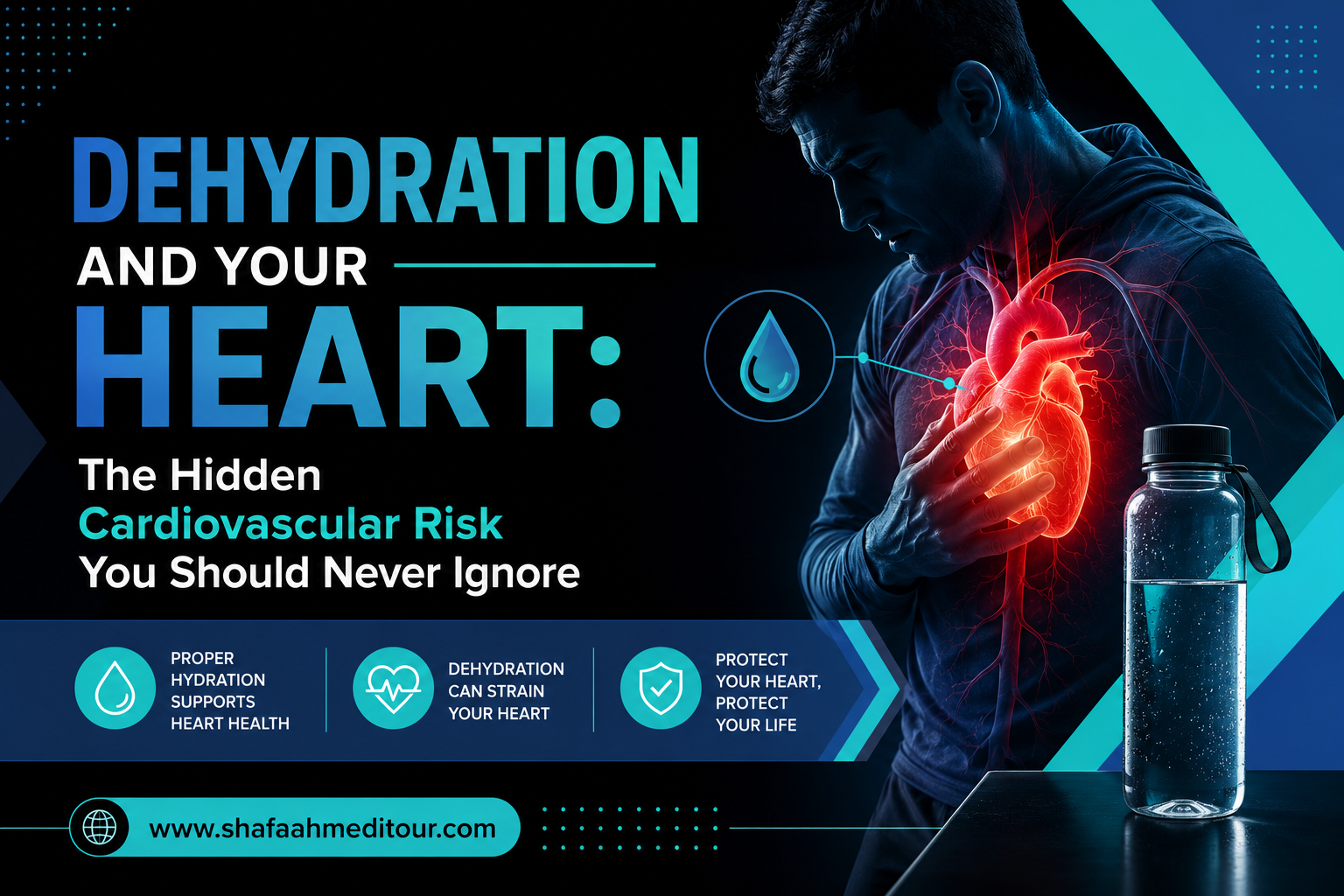
Dehydration is often treated like a minor problem: drink some water when you feel thirsty and move on. But your body does not see dehydration as something insignificant. When fluid levels fall, your blood volume can decrease, your heart may have to work harder, and your circulation can be affected. What looks like simple thirst can become a serious strain on the cardiovascular system, especially during hot weather, intense exercise, illness, or prolonged periods without enough fluids.
1. Your heart depends on adequate hydration
Your heart is a powerful pump, but it cannot work independently of the rest of your circulation. Blood contains a significant amount of water, so losing too much fluid can reduce circulating blood volume. When this happens, the heart may beat faster to help maintain adequate blood flow to vital organs. That extra workload is one reason dehydration should not be dismissed, particularly in people who are older, physically active, or already dealing with cardiovascular concerns.
2. Dehydration can make your heart work harder
When the body loses water, blood volume can fall and the blood can become more concentrated. Your cardiovascular system responds by trying to maintain circulation and blood pressure. For some people, this may mean a noticeable increase in heart rate, weakness, dizziness, or fatigue. The important message is simple: your heart can feel the consequences when your body does not receive enough fluid.
3. Hot weather makes the risk more important
Heat increases fluid loss through sweating, and this can happen faster than many people realize. In Malaysia and other hot, humid regions, spending hours outdoors, exercising, traveling, or working in heat can increase the need for fluids. Waiting until you feel extremely thirsty may not be the best strategy. Regular fluid intake throughout the day can help your body maintain the hydration it needs for normal circulation and temperature regulation.
4. Exercise can quietly drain your fluid levels
Physical activity is excellent for cardiovascular health, but exercise also increases fluid loss through sweat. Long workouts, running, outdoor sports, and strenuous physical work can create substantial fluid requirements. If you replace too little of what you lose, you may experience headache, unusual tiredness, dizziness, muscle cramps, or a racing heartbeat. Hydration should therefore be considered part of responsible exercise preparation, not an afterthought.
5. Dehydration may affect blood pressure
Fluid balance and blood pressure are closely connected. When the body loses significant amounts of fluid, blood pressure can fall, particularly when a person suddenly stands up. This can cause lightheadedness or even fainting. At the same time, the body’s hormonal and nervous systems respond to dehydration in ways designed to preserve circulation. This is another reason why maintaining adequate hydration matters for cardiovascular function.
6. Some people need to be especially careful
The effects of dehydration are not identical for everyone. Older adults may have a reduced sensation of thirst, while people who exercise heavily or work in hot environments can lose fluids quickly. Vomiting, diarrhea, fever, and excessive sweating can also accelerate fluid loss. People taking certain medications or living with heart or kidney conditions should follow individualized fluid guidance from their healthcare professional rather than assuming that everyone needs the same amount of water.
7. Thirst is a signal, not something to ignore
Your body has sophisticated mechanisms for regulating water balance, and thirst is one of its important warning signals. A dry mouth, dark urine, headache, fatigue, dizziness, and reduced urination can accompany dehydration. However, symptoms can vary, and thirst alone does not tell you exactly how severe dehydration may be. Paying attention to your body’s signals and maintaining regular fluid intake can be a much smarter approach than repeatedly pushing hydration aside.
8. Not every hydration problem is solved by simply drinking more water
Water is essential, but hydration is also influenced by electrolytes and the circumstances in which fluid is lost. During ordinary daily activities, a balanced diet and regular fluid intake are generally sufficient for many people. During prolonged heavy sweating, illness, or significant fluid loss, electrolyte replacement may sometimes be appropriate. People with medical conditions affecting fluid or electrolyte balance should seek professional advice rather than relying on generalized hydration trends.
9. Your daily hydration habits matter more than you think
Good hydration does not need to be complicated. Keep water accessible, drink regularly throughout the day, increase attention to fluids during hot weather and physical activity, and pay attention to changes in urine output and color. Foods with high water content can also contribute to overall fluid intake. Building hydration into your daily routine is easier and more effective than trying to compensate after you already feel exhausted, dizzy, or severely thirsty.
10. Know when dehydration becomes an urgent concern
Severe dehydration can become a medical emergency. Confusion, fainting, extreme weakness, very little or no urination, rapid heartbeat, rapid breathing, or inability to keep fluids down are warning signs that require prompt medical attention. Chest pain, severe shortness of breath, or persistent palpitations should never automatically be blamed on dehydration. These symptoms can have other serious causes and deserve urgent evaluation.
11. Protecting your heart starts with everyday choices
Heart health is not built only through major lifestyle changes. It is also influenced by the small decisions repeated every day: staying active, eating a balanced diet, managing risk factors, getting enough rest, and maintaining appropriate hydration. Dehydration may seem ordinary, but your cardiovascular system does not operate in isolation from your body’s fluid balance. The next time you ignore thirst because you are busy, remember that your body is already asking for attention. Listen earlier, hydrate responsibly, and do not wait for a small warning to become a bigger problem.