
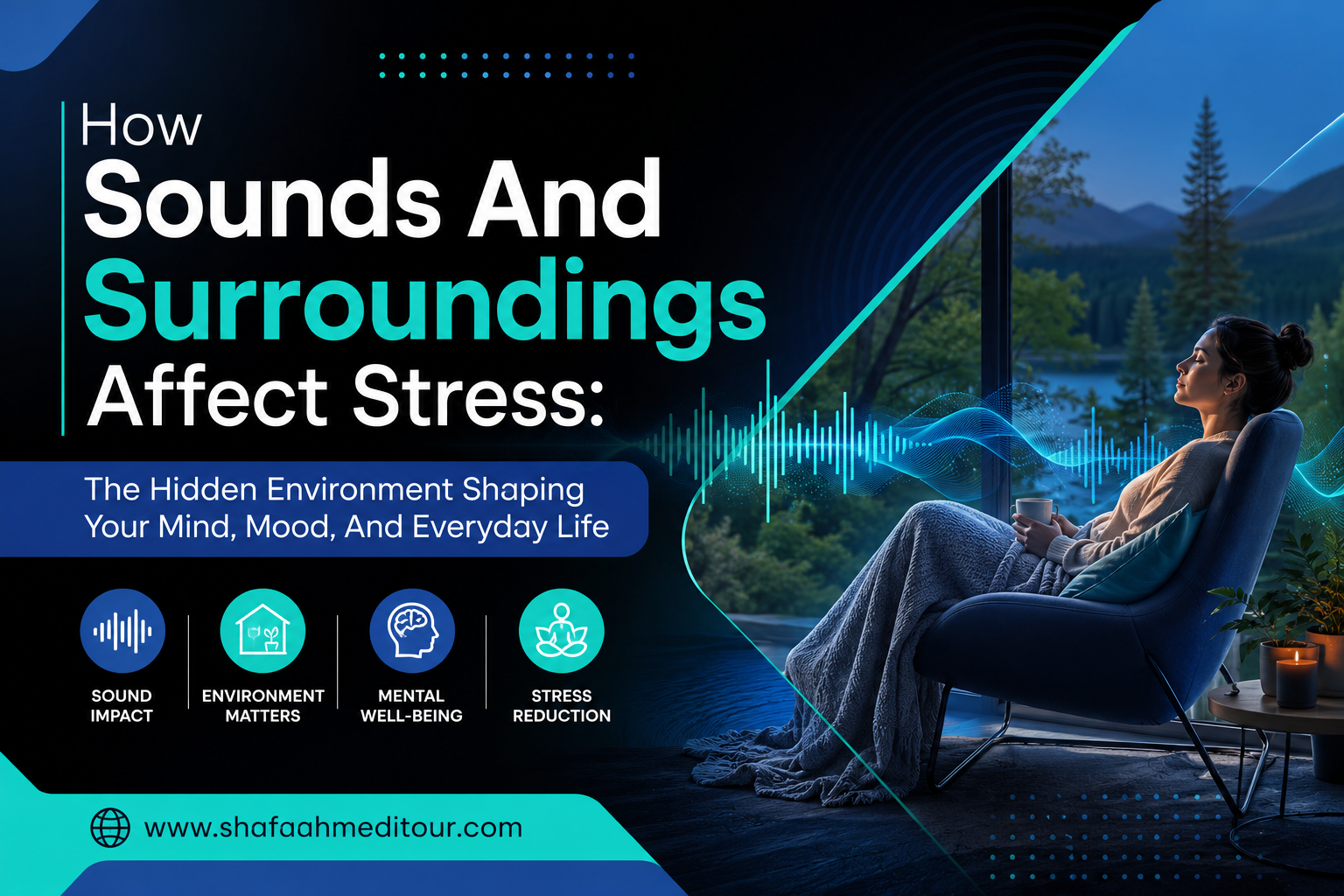
Stress does not always begin with a difficult conversation, a heavy workload, or a major life problem. Sometimes, it begins with what you hear and what surrounds you every day. The constant traffic outside your window, loud conversations, construction noise, crowded spaces, harsh lighting, repetitive sounds, or an environment that never feels calm can gradually place your mind under pressure. The sounds and surroundings around you can influence how your brain responds to everyday situations, making your environment an important part of emotional well-being.
1. Your Environment Can Speak To Your Nervous System
Your brain is constantly collecting information from the environment, even when you are not consciously paying attention. Sounds, movement, temperature, lighting, crowding, and visual disorder can all contribute to how safe, comfortable, or alert you feel. When an environment contains frequent unpredictable stimulation, your brain may remain more alert than necessary. This is one reason why a person can feel exhausted after spending hours in a noisy or chaotic environment without doing anything physically demanding. The surroundings you ignore consciously may still be influencing you biologically and emotionally.
2. Loud And Unpredictable Sounds Can Increase Mental Pressure
Not every loud sound creates the same response. A predictable sound, such as a familiar household appliance, may become easy to ignore, while sudden horns, shouting, alarms, drilling, or unexpected bangs can immediately capture attention. These sounds can interrupt concentration and force the brain to repeatedly shift from relaxation toward alertness. When interruptions happen throughout the day, the result may be frustration, mental fatigue, reduced concentration, and a feeling that you cannot fully switch off. The problem is not simply volume; unpredictability and repetition can make ordinary environments feel mentally demanding.
3. Traffic Noise Can Follow You Even When You Are Not Listening
For people living near busy roads, airports, railway lines, commercial districts, or construction zones, environmental noise can become a persistent part of daily life. You may eventually stop consciously noticing it, but that does not necessarily mean the environment has become completely irrelevant to your stress response. Continuous background noise can interfere with rest, concentration, communication, and sleep. Over time, an environment that rarely becomes genuinely quiet may make recovery from daily pressure more difficult. Sometimes the first step toward a calmer life is recognizing that your surroundings may be contributing to the pressure you already feel.
4. Crowded And Chaotic Spaces Can Drain Your Attention
Stress is not created by sound alone. Your visual and physical surroundings can also affect your mental state. Crowded rooms, constant movement, clutter, poor organization, uncomfortable temperatures, and limited personal space can create additional demands on attention. When your brain has too much information to process, even simple tasks can begin to feel harder. This does not mean every messy room or crowded place automatically causes stress, but it does explain why some environments feel significantly more tiring than others. A calmer physical environment can reduce unnecessary stimulation and give your attention more room to breathe.
5. Silence Can Be Powerful, But It Is Not Always The Answer
A quieter environment can provide relief from excessive stimulation, especially when someone has spent hours dealing with interruptions. However, complete silence is not universally relaxing. Some people find gentle background sounds, nature sounds, soft music, or familiar ambient noise more comfortable than absolute silence. The important question is not simply whether your environment is silent, but whether the sounds around you help your mind settle or repeatedly demand attention. The best sound environment is often the one that feels predictable, comfortable, and appropriate for what you are trying to do.
6. Nature Sounds Can Create A Different Kind Of Environment
Rain, flowing water, birdsong, wind through trees, and other natural sounds are often perceived as more soothing than harsh or unpredictable urban noise. Spending time in natural environments can also provide visual and sensory variation that feels less demanding than highly crowded or industrial spaces. Even when stepping into nature is not possible, people sometimes use recordings of natural sounds to create a more relaxing background while reading, resting, or working. Your environment does not have to be perfect to become calmer; small changes in the sensory atmosphere can make a meaningful difference to how a space feels.
7. Your Home Should Not Become Another Source Of Constant Pressure
Home is supposed to provide an opportunity to recover from the demands of the outside world. Yet for many people, home can contain its own collection of stress triggers: television playing constantly, phone notifications, household arguments, clutter, loud appliances, excessive screen use, or a workspace that never feels separate from personal time. Creating a calmer corner of your home can help establish a psychological signal that it is time to slow down. Reducing unnecessary noise, organizing frequently used spaces, and creating periods without digital interruptions can turn part of your home into a genuine recovery environment.
8. Sleep Is One Of The Biggest Reasons Your Sound Environment Matters
Nighttime noise can be particularly disruptive because sleep requires a stable environment. Traffic, neighbors, television, pets, notifications, or sudden environmental sounds can interrupt the transition into sleep or disturb sleep continuity. Poor sleep can then make everyday stress feel harder to manage the following day, creating a cycle in which stress affects sleep and inadequate rest makes stress more difficult to handle. Improving the bedroom environment therefore deserves attention. A darker, quieter, cooler, and more comfortable sleeping space may support better rest and make it easier for your mind and body to recover from daily demands.
9. The Right Environment Depends On The Person
There is no single perfect environment for everyone. One person may concentrate best in a quiet room, while another may prefer soft background music. Someone may feel energized in a busy café, while another person may become overwhelmed by the same environment. Personal preferences, sensitivity to stimulation, work demands, cultural expectations, and previous experiences can all influence how surroundings are perceived. Instead of copying someone else’s idea of a relaxing environment, pay attention to your own responses. Notice which sounds and spaces leave you feeling restored and which ones leave you tense, distracted, or exhausted.
10. You Can Start Reducing Environmental Stress Today
You do not need to completely redesign your life to create a calmer sensory environment. Start by identifying the sounds and surroundings that repeatedly interrupt your peace. Silence unnecessary notifications, reduce background television, use quieter spaces for focused work, improve the organization of your immediate surroundings, spend time outdoors when possible, and protect your bedroom from unnecessary nighttime noise. If noise cannot be eliminated, consider practical ways to reduce its impact, such as closing windows, improving room insulation, or using comfortable hearing protection where appropriate. Small environmental changes become powerful when they are repeated consistently.
11. Your Surroundings Deserve More Attention Than You Think
Stress management is often discussed in terms of exercise, sleep, nutrition, time management, and emotional resilience. These are important, but the environment in which you perform all of them also matters. You cannot always control traffic, construction, other people, or unexpected noise, but you can often control more of your immediate surroundings than you realize. Before accepting constant stimulation as normal, ask yourself a simple question: Is my environment helping me recover, or is it quietly keeping me on alert? The answer could reveal a practical opportunity to reduce unnecessary stress and create a healthier daily rhythm. Your surroundings are not merely the background of your life. They are part of the experience of living it.
Take Action: Create A Calmer Environment Before Stress Becomes Your Normal
Look around you today. Listen carefully. What do you hear when you wake up? What sounds follow you while you work? What does your bedroom feel like at night? Is your home giving your mind opportunities to recover, or is it continuously demanding attention?
You may not be able to control every sound or circumstance around you. But you can identify what repeatedly disrupts your peace and make intentional changes where possible. A calmer environment will not eliminate every source of stress, but creating fewer unnecessary stressors can give your mind more space to deal with the challenges that genuinely matter.