If you are overwhelmed by complicated workout plans, endless fitness trends, and confusing advice, stop right here. You do not need twenty machines. You do not need secret formulas. You only need five powerful exercises to strengthen your muscles, reshape your body, and rebuild your confidence.
This is not hype. This is simplicity backed by science, performance, and decades of real-world results.
In a world where attention is scattered and motivation fades fast, simplicity wins. The strongest bodies are often built on the most basic movements. And today, you are about to discover exactly what those are.
Why Most People Fail to Build Strength
Before we dive into the five exercises, let us face the truth.
Most people:
Jump from one workout program to another
Focus on isolated movements instead of full-body strength
Skip foundational exercises
Train without progression
Quit before results appear
Strength does not come from doing more. It comes from doing the right movements consistently and progressively.
If you commit to mastering just five exercises, your body will change. Your posture will improve. Your metabolism will increase. Your confidence will rise.
Now let us break them down.
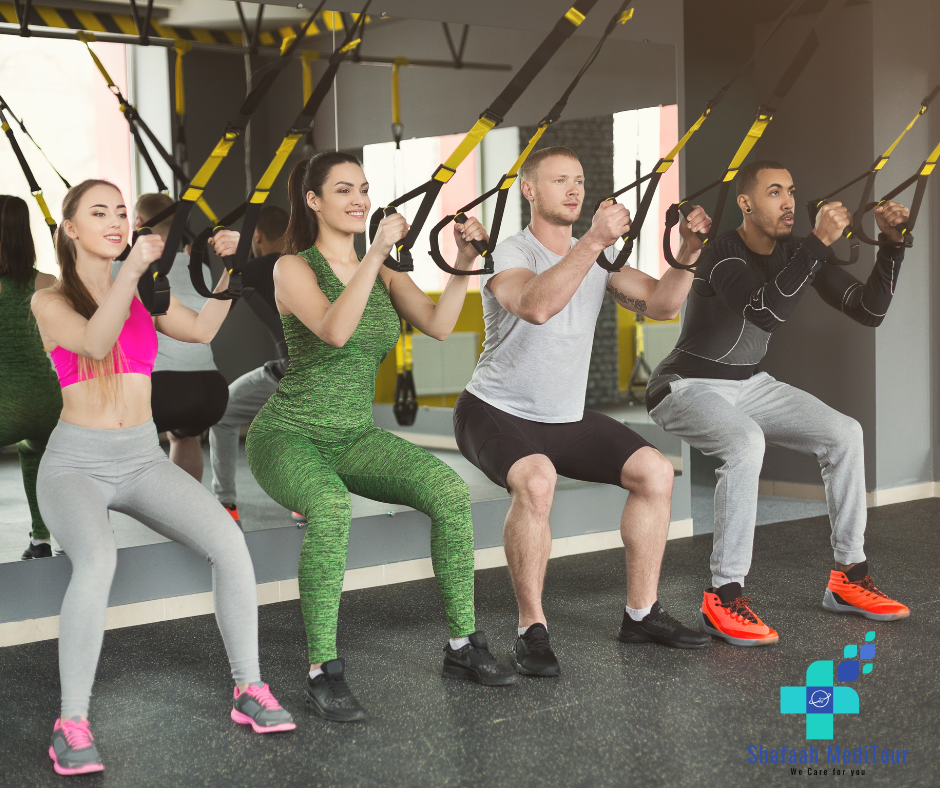
1. Squats – The Foundation of Total Lower Body Strength
Squats are not optional. They are essential.
What muscles do squats strengthen?
Squats target your quadriceps, hamstrings, glutes, calves, and core. They also stimulate growth hormone production, making them one of the most powerful muscle-building movements.
Why squats matter
Improve lower body strength
Increase athletic performance
Boost metabolism
Strengthen joints and bones
Enhance posture
Whether you choose bodyweight squats, barbell squats, or goblet squats, this movement trains your body the way it was designed to move.
If you skip squats, you are leaving massive strength gains on the table.
2. Deadlifts – The Ultimate Power Builder
Deadlifts are raw strength. They train nearly every muscle in your body.
What muscles do deadlifts work?
Deadlifts activate your glutes, hamstrings, lower back, upper back, traps, core, and grip strength.
Why deadlifts are non-negotiable
Build posterior chain strength
Improve functional movement
Increase overall muscle mass
Develop grip power
Protect your lower back when performed correctly
Many people avoid deadlifts because they look intimidating. That is exactly why they are powerful. Learning proper form and progressively increasing weight can completely transform your physique.
If you want real strength, you cannot ignore this movement.
3. Push-Ups or Bench Press – Upper Body Pushing Strength
You need at least one strong pushing movement in your routine.
Push-ups are simple yet incredibly effective. Bench presses add resistance and advanced overload.
What muscles do push-ups and bench press target?
Chest, shoulders, triceps, and core.
Why pushing exercises are critical
Sculpt the chest
Strengthen shoulders
Improve upper body endurance
Increase pushing power
Push-ups are accessible to everyone. Bench presses allow progressive overload. Both build visible upper body strength.
Consistency here means stronger arms, a firmer chest, and improved posture.
4. Pull-Ups or Rows – The Back Strength Builder
Most people overtrain their chest and neglect their back. That imbalance leads to poor posture and injury.
Pull-ups and rows fix that.
What muscles do pull-ups and rows work?
Lats, rhomboids, traps, biceps, and rear shoulders.
Why pulling exercises are essential
Create a wider, stronger back
Improve posture
Prevent shoulder injuries
Enhance upper body symmetry
If you cannot do a pull-up yet, start with assisted variations or rows. The goal is progression, not perfection.
A strong back supports everything else.
5. Planks – Core Strength That Supports Everything
Without a strong core, your strength collapses.
Planks may look simple, but they demand total-body tension.
What muscles do planks strengthen?
Abdominals, obliques, lower back, shoulders, and glutes.
Why planks matter
Improve stability
Protect the spine
Enhance performance in all other lifts
Reduce risk of injury
The core is your foundation. Ignore it and everything else becomes unstable.
Why These Five Exercises Work Better Than Complicated Programs
These movements are compound exercises. That means they train multiple muscle groups at once.
Compound training:
Burns more calories
Builds more muscle
Saves time
Improves coordination
Increases hormonal response
You do not need flashy workouts. You need intensity, proper form, and progressive overload.
If you focus on increasing strength in these five movements over the next 90 days, your body will change.
Not maybe. It will.
How to Structure Your Weekly Plan
Here is a simple structure:
Day 1
Squats
Push-ups or bench press
Planks
Day 2
Deadlifts
Pull-ups or rows
Planks
Train three to four times per week. Add weight gradually. Track your reps. Focus on form.
Progress is not random. It is measured.
Urgency: Why You Must Start Now
Every week you delay, muscle mass declines. Strength decreases. Metabolism slows. Confidence fades.
Strength training is not about vanity. It is about:
Long-term health
Injury prevention
Bone density
Hormonal balance
Mental resilience
The older you get, the more critical strength becomes.
This is not just about building muscle. It is about building a body that supports your life.
Frequently Asked Questions
Can beginners do these exercises?
Yes. Start with bodyweight versions and focus on form.
How long before I see results?
With consistency, visible improvements can appear in four to eight weeks.
Do I need supplements?
No supplement replaces disciplined training and proper nutrition.
Can I lose fat with these exercises?
Yes. Combined with proper nutrition, compound strength training supports fat loss effectively.
Final Wake-Up Call
You do not need confusion. You need clarity.
You do not need more exercises. You need better execution.
You do not need motivation. You need commitment.
Master these five movements. Track your progress. Increase your strength. Build discipline.
The strongest version of you is built on simple foundations repeated consistently.
The question is not whether these exercises work.
The question is whether you are ready to commit.