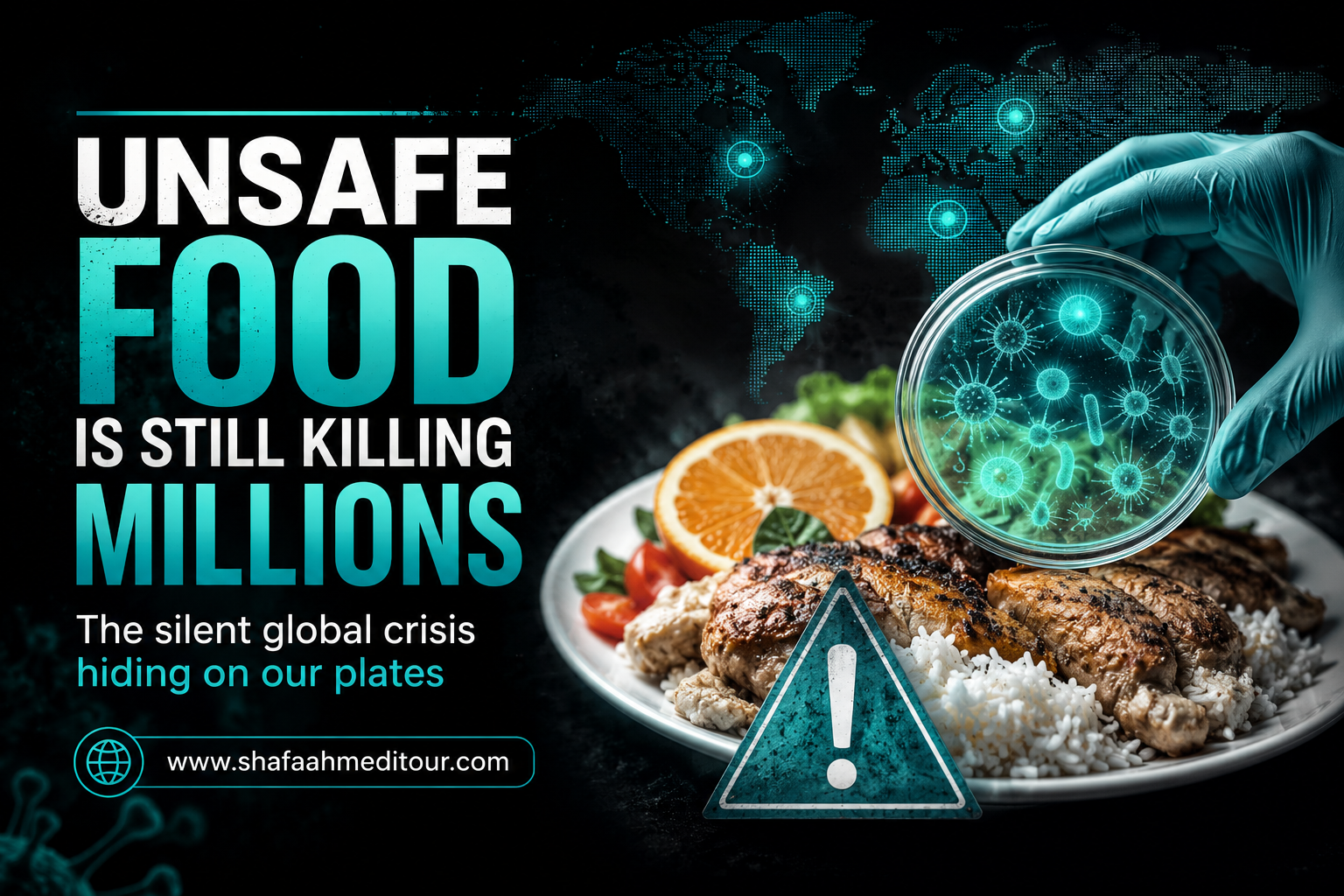
Food is meant to sustain life, bring families together, and fuel human progress. Yet every day, millions of people unknowingly consume food that contains harmful bacteria, viruses, parasites, toxins, and chemical contaminants. What should be a source of health and happiness often becomes a source of illness, suffering, and death.
Despite remarkable advances in technology, healthcare, agriculture, and global food distribution, unsafe food remains one of the world’s most persistent and deadly public health challenges. The tragedy is not confined to one nation, one region, or one economic class. It affects everyone—from children in developing countries to consumers in highly developed economies.
The uncomfortable truth is that unsafe food is still a major killer around the world, and unless stronger actions are taken, millions more people will continue to suffer the consequences.
A global problem hiding in plain sight
Foodborne diseases rarely receive the same attention as pandemics, natural disasters, or major health emergencies. Yet their impact is enormous.
Contaminated food can carry dangerous microorganisms and toxic substances that cause severe illness. Every year, countless people experience food poisoning, intestinal infections, organ damage, long-term health complications, and, in the most tragic cases, death.
Many consumers assume that food sold in markets, restaurants, supermarkets, and online platforms has already passed rigorous safety checks. While regulations exist in many countries, food contamination can occur at any stage of the supply chain.
From farms and factories to transportation networks and retail shelves, a single mistake can expose thousands of people to dangerous health risks.
The hidden dangers lurking in food
Food contamination comes in many forms.
Biological contamination
This includes harmful bacteria, viruses, fungi, and parasites. These microorganisms can multiply rapidly when food is improperly stored, prepared, or handled.
Common causes include:
- Poor hygiene practices
- Improper cooking temperatures
- Cross-contamination between raw and cooked foods
- Unsanitary food processing environments
Chemical contamination
Chemicals can enter food through pesticides, industrial pollutants, cleaning agents, or improper food packaging materials.
Long-term exposure may contribute to serious health problems, including chronic illnesses and developmental issues.
Physical contamination
Foreign objects such as metal fragments, glass pieces, plastic particles, or other materials can accidentally enter food products during production or packaging.
These contaminants can cause injuries and significant health concerns.
Environmental contamination
Climate change, polluted water sources, and environmental degradation are creating new food safety challenges worldwide.
Extreme weather events can increase the spread of foodborne pathogens and make food production systems more vulnerable.
Why children pay the highest price
Among all populations affected by unsafe food, children often suffer the most severe consequences.
Young immune systems are less capable of fighting dangerous pathogens. Contaminated food can lead to severe dehydration, malnutrition, developmental complications, and life-threatening illnesses.
For families already facing economic hardship, foodborne diseases can create a devastating cycle of medical expenses, lost income, and long-term health challenges.
Every contaminated meal places vulnerable children at unnecessary risk.
The economic damage is staggering
The impact of unsafe food extends far beyond hospitals and healthcare systems.
Businesses face costly recalls, legal liabilities, damaged reputations, and declining consumer trust.
Governments must allocate significant resources to disease surveillance, outbreak investigations, healthcare treatment, and food safety enforcement.
Workers who become ill lose productivity, while employers face disruptions that affect supply chains and economic growth.
The financial burden associated with unsafe food reaches into billions of dollars annually across global economies.
Globalization has increased the challenge
Today’s food supply chains are more interconnected than ever before.
A product harvested in one country may be processed in another, packaged in a third nation, and consumed thousands of miles away.
While globalization has increased food availability and variety, it has also created greater complexity in monitoring safety standards.
A contamination event occurring in one location can rapidly affect consumers across multiple countries.
This interconnected system demands stronger international cooperation, better traceability technologies, and more transparent food safety practices.
Why food safety must become everyone’s responsibility
Governments cannot solve this problem alone.
Food manufacturers, distributors, retailers, restaurants, farmers, healthcare professionals, and consumers all play vital roles in preventing foodborne illnesses.
Food safety must become a shared responsibility.
Businesses must invest in quality control systems.
Employees must receive proper food handling training.
Consumers must practice safe food storage and preparation habits.
Educational institutions must promote food safety awareness from an early age.
Every link in the food chain matters.
Technology can help save lives
Innovation is creating powerful opportunities to improve food safety.
Advanced testing technologies can identify contamination faster than ever before.
Artificial intelligence can help predict food safety risks before outbreaks occur.
Blockchain systems can improve food traceability across complex supply chains.
Smart monitoring systems can detect temperature fluctuations during transportation and storage.
These technologies offer hope, but they must be implemented widely and consistently to achieve meaningful results.
The human stories behind the statistics
Behind every foodborne illness statistic is a real person.
A child who misses school because of severe illness.
A parent struggling with unexpected medical expenses.
A worker unable to earn a living while recovering.
A family mourning the loss of a loved one.
The numbers alone cannot fully capture the emotional pain caused by unsafe food.
This is not merely a public health issue.
It is a human issue.
It affects lives, dreams, families, and futures.
The time for action is now
The world cannot afford to treat food safety as an afterthought.
As populations grow and food systems become increasingly complex, the risks associated with unsafe food will continue to evolve.
Governments must strengthen regulations.
Businesses must prioritize safety over short-term profits.
Consumers must remain informed and vigilant.
Healthcare organizations must continue educating communities.
Researchers must develop better prevention and detection methods.
Every safe meal served today represents a life protected tomorrow.
Final thoughts
Unsafe food remains one of the most preventable causes of illness and death worldwide. Yet millions continue to face unnecessary risks every day.
The solution is not impossible. The knowledge, technology, and expertise already exist. What is needed now is commitment, accountability, and action at every level of society.
Food should heal, nourish, and sustain life—not threaten it.
The next chapter in global health must include a renewed commitment to food safety. Because when food becomes safer, communities become healthier, economies become stronger, and countless lives are saved.
The question is no longer whether unsafe food remains a global killer.
The question is how much longer the world is willing to accept it.